




Nov 24 Leadership Lessons from Milan to Lake Como – Part 1
Perspective, Patience, and People
Leadership perspectives often broaden when we venture outside the familiar. Sometimes, the best leadership lessons aren’t in a conference room but on a journey that shows how culture, history, and human connection reveal what true leadership is.
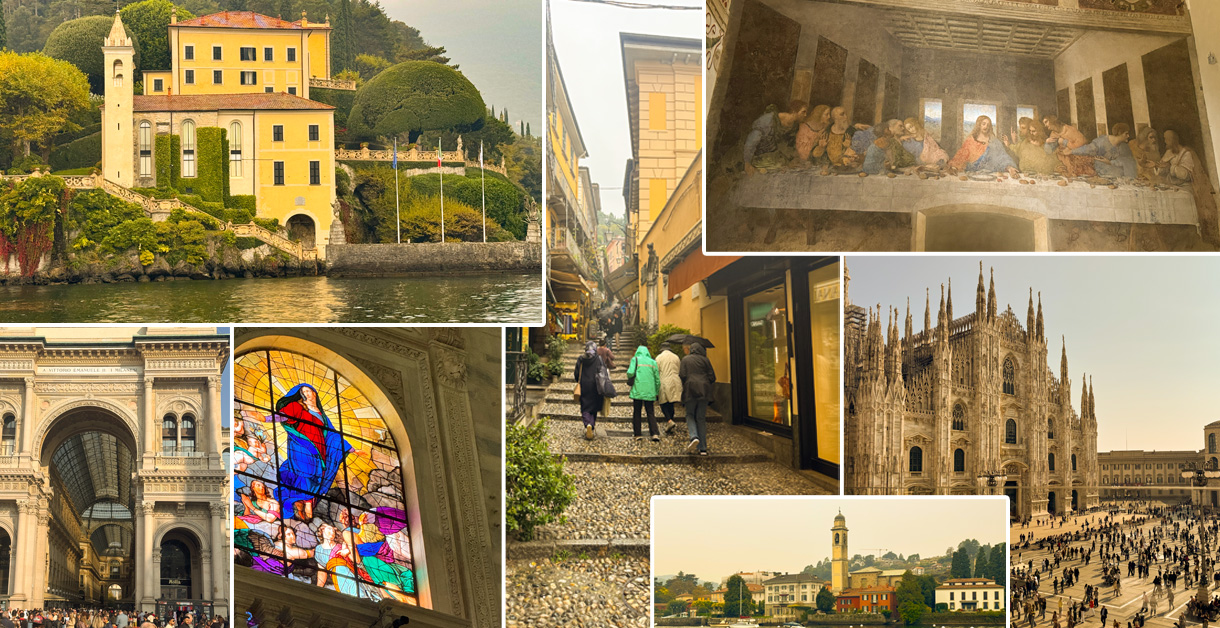
Leadership lessons don’t always happen in boardrooms. Sometimes they occur on the cobblestone streets of Milan, the rooftops of the Duomo, or on a boat drifting across Lake Como.
Traveling through Italy with the Gwinnett Chamber’s Embark group was more than a sightseeing trip. It served as a living classroom on leadership. Each stop provided a new perspective on vision, culture, and connection.
And yes, we might have seen George Clooney waving from his dock, and we cruised past a James Bond film location. It was the perfect reminder that leadership, like Bond’s martini, should be shaken by challenge, not stirred by chaos (and ideally enjoyed with good company).
-
Great Leaders, Like Great Cities, Are Always Evolving
Milan is a city of striking contrasts, with Gothic spires next to glass skyscrapers and historic cathedrals alongside modern fashion houses.
True leaders develop in the same way. They honor their history while reinventing themselves for what’s ahead. Growth without change leads to obsolescence.
Milan never stops evolving. The city doesn’t abandon its heritage; it reinterprets it. The same applies to leaders who remain relevant. They know that transformation isn’t about dismissing the past but building on it for reinvention. Senior executives who succeed in changing markets do so because they understand how to preserve the core of their leadership while adapting their approaches to fit the moment. Evolution, at its heart, isn’t about speed; it’s about staying genuine while remaining current.
-
Masterpieces Require Time and Patience
Standing before The Last Supper was humbling. Leonardo da Vinci did not paint it elsewhere. He stood in that very refectory, blending innovation and patience into every brushstroke. Leadership masterpieces are created on site, through persistence, experimentation, and consistency. Lasting results are never rushed.
The modern world values urgency, but the leaders who achieve the most meaningful results are those who give their ideas time to develop. Patience is not about being passive; it is discipline in action. Leonardo’s brilliance wasn’t in speed; it was in his willingness to wait for the right conditions, to let the work breathe, and to trust the process. The same principle applies to leadership transformation. The best strategies, cultures, and teams grow through iteration. Leaders who can resist rushing, keep their vision steady, and let progress unfold are the ones who create lasting impact.
-
Authentic Leadership Makes Its Impact Where It Is Practiced
Unlike Michelangelo’s David, which was moved long after it was finished, The Last Supper remains exactly where it was created. Leonardo’s influence continues to fill the space.
Leadership impact functions similarly. When we show up fully, present, and intentional, our mark endures long after we’re gone.
In a world that often values mobility and growth, it’s easy to overlook the strength of local influence. True leaders understand that importance starts right where they are. Their presence can transform meetings, cultures, and mindsets. They don’t seek recognition; they foster connection. Lasting influence isn’t usually loud; it’s the quiet kind that continues to shape others long after the leader has moved on.
-
Details Define Excellence
In Milan’s ateliers, tailors and designers obsess over hidden details. Perfect stitches, invisible seams, and flawless finishes.
Leadership excellence isn’t in big strategy meetings; it’s demonstrated through small actions like follow-through, empathy, and integrity. Details show you care.
Excellence resides in what others overlook. The consistent tone in a leader’s message, the thoughtful follow-up after a meeting, and the way feedback is delivered. These seemingly small details communicate who you are far more than any presentation. Just as a tailor’s unseen work defines the quality of a garment, a leader’s unseen discipline defines the strength of the culture. When leaders pay attention to the details, they foster trust. And trust, like fine craftsmanship, never goes out of style.
-
Connection Shapes Culture
Between shared meals, laughter, and lakeside conversations, the highlight of the Embark trip was forming genuine relationships with fellow Gwinnett leaders.
Leadership depends on genuine connection. When people feel recognized, trust grows, and culture turns into your greatest competitive strength.
Connection isn’t just about networking; it’s about practicing genuine curiosity. True leaders take the time to understand the stories, motivations, and challenges of the people around them. They know that culture isn’t written on posters but is lived through relationships. In Italy, every conversation was slower, and every meal was more intentional. That rhythm reminded me that connection isn’t about efficiency, it’s essential. Leaders who create space for real human connection don’t just keep people around; they inspire them to contribute more fully.
-
Collaboration Is the Most Valuable Currency
From Milan’s artisans to Bellagio’s ferry operators, everything in Italy runs on collaboration.
In leadership, collaboration progresses more quickly than control. When we team up across borders and focus on common goals, everyone gains.
In an era where many leaders equate control with effectiveness, collaboration represents the quiet revolution. The most successful organizations are built not on individual brilliance but on collective intelligence. Collaboration requires humility, the ability to say, “I don’t have all the answers, but together we can find them.” Whether it’s in design studios, global teams, or boardrooms, leaders who trade ego for partnership create systems that sustain progress long after they leave.
-
True Vision Comes from Rising Above the Noise
Walking on the rooftop of the Duomo, I saw how chaos below turned into perfect symmetry from above.
Perspective is essential for clarity. Leaders who rise above distractions notice patterns others overlook and make smarter, more stable decisions.
Every executive faces a flood of information and demands. Yet, clarity doesn’t come from more data; it comes from elevation. Perspective lets you see what truly matters. From above, the noise quiets and the structure becomes clear. The most strategic leaders deliberately rise above daily urgency to realign with long-term purpose. They understand that stepping back is not retreat. It’s the vantage point needed to move forward with conviction.
-
Reflection Transforms Experience into Wisdom
Watching the sun set behind the Alps over Lake Como, I realized how reflection turns movement into understanding.
Experience alone does not guarantee growth, reflection does. Leaders who take time to process learn from their mistakes and turn them into an advantage.
We often confuse being busy with being effective. The truth is that wisdom only develops when experience meets reflection. Just as Lake Como reflects the peaks above it, reflection helps leaders see what their pace might have hidden. Without reflection, lessons fade away. With it, they become clearer. The best leaders protect time to think, not because they have the luxury, but because they know it’s essential.
Closing Reflection
From da Vinci’s patience to Milan’s reinvention, Italy reminded me that leadership blends craft, courage, and connection. And yes, a touch of humor helps too.
When was the last time you stepped outside your routine to see leadership from a new perspective?
- About the Author
- Latest Posts

Sarah Hathorn, CEO of Hathorn Consulting Group, is the go-to-expert in working with leaders and companies to create successful corporate DNA. As an executive coach, consultant and speaker she collaborates globally with clients and brands such as Deloitte, McKesson, Kimberly-Clark, Sherwin-Williams, Home Depot and other leading organizations.
Subscribe today to get my newsletter, Corporate DNA™ for leadership articles on how to maximize your talent pipeline, develop & enhance leadership capabilities, inspire and influence to communicate top results and much more.
Sorry, the comment form is closed at this time.